And the award goes to...
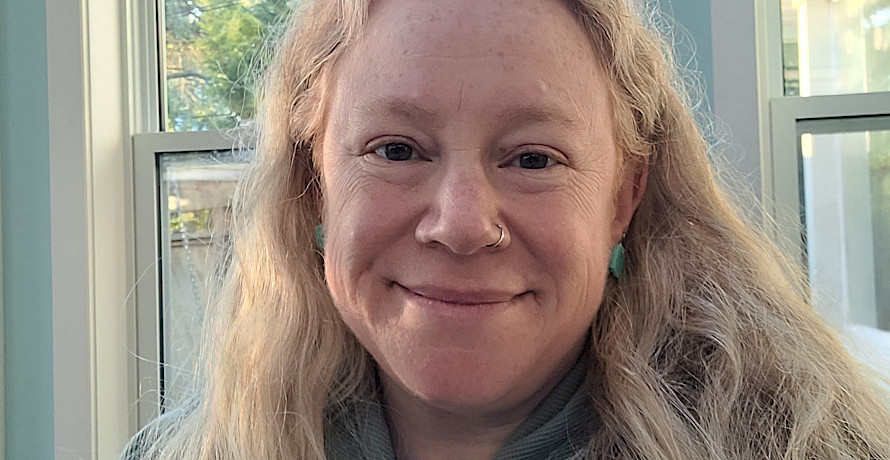
Na Justin Lehmiller, Umut Özdemir en Lori Brotto is Sari van Anders de vierde winnaar van de Ellen Laan Award for Translational Sexual Science. De award werd uitgereikt tijdens het jaarlijkse IASR-congres, dat deze keer plaatsvond in Porto. Sari is een vooraanstaande Canadese wetenschapper en hoogleraar wiens werk baanbrekend is op het snijvlak van biologie, seksualiteit en gender.
Can you tell us who you are and why you received this award?
'I’m Sari van Anders, the Canada Research Chair in Gender/Sex and Sexual Diversity, and Professor of Psychology, Gender Studies, and Neuroscience at Queen’s University. My research focuses on gender/sex and sexual diversity, sexuality, social neuroendocrinology, and feminist and queer science. One of the major aims of my research program is to shape and transform what knowledge is available for people to make sense of their experiences, and help support what is called “epistemic justice”, or the justice of knowledge systems. To that end, it’s important for me not only to build my theory and research on people’s lived experiences, but also to make that knowledge available. So, we’ve worked hard to share our work in more traditional, formal academic formats, but also those that are more accessible and lively.'
'Ellen was an example and a figure we all admired'
'To share our work, we’ve worked extensively in different formats, to reach a wide array of the public, other researchers, and more, and here are some examples. We’ve made a zine, a sort of informal magazine, about my sexual configurations theory, and folks from all over the world access it and have even translated it; it’s now available in a number of languages! We’ve also made cartoons, and evaluated how effective they are with the public, with therapists/counselors, and with researchers. We provide summaries of our work, and give interviews with podcasters and news media. And, for four years running, I’d organized a summer session on gender/sex/uality injustice that brings together experts in the field as facilitators, and attendees from all over the world. We meet for multiple hours over multiple weeks, learning and discussing theme-specific material (e.g., Black feminisms, decolonial approaches, trans resistance, etc.). These attendees are truly global, ranging from those in the anglophone west, other parts of Europe, those in South Asia (e.g., India), South and Central America, and many more!'
What effect has receiving this award on your work?
'It was wonderful to receive this award, especially because I knew Ellen, and we attended multiple conferences together. She was such a fierce supporter of women’s sexual health and sexuality research, so it means so much to receive an honour in her name. Doing translational work and sharing our research more broadly is so crucial, but also something that few academics are trained in. Moreover, it’s often not valued, seen as a sort of “extra” or “add-on” to the “real work” of our empirical research and academic publications. So, receiving this award helps to highlight the value and significance of this kind of work. It is truly motivating, validating, and rewarding! In addition, I was nominated by a past graduate student who is a phenomenal researcher in her own right, and a colleague/peer who is one of the leading researchers in our field – including in intentional public impact. So, to be held in this regard by such stellar members of our community is incredibly meaningful.'
What is your main motivation in your work?
'In my work, I’m motivated to understand basic processes, structures, and meanings of gender/sex and sexual diversity, sexuality, and the impacts of these on hormones, while attending to feminist and queer principles, since these help to provide more truthful knowledge. But so much of the research either focuses specifically on singular parts of a whole (often not attending to the same marginalized groups) or treats diverse groups as too similar, collapsing meaningfully different lived experiences. I aim to understand gender/sex and sexual phenomena at a sort of meta-scale and in its particularities, attending to the groups’ lived experiences while also attending to phenomena that cross groups. I’ve also been motivated by the many people who communicate with me and my lab about how meaningful our work is to them; the theories and research help them to make sense of themselves and experiences that had been challenging, confusing, or even gaslighting in the past.'
You mentioned that you knew Ellen...
'I did know Ellen personally, attending some of the same conferences, and reading her work. She was a figure we all admired, because of her commitment to feminist work, to women’s sexuality, to challenging inherited wisdom, and to expanding our knowledge. She made a huge impact on the field, and continues to be present – in terms of her leadership, the papers she published that are still – and will continue to be! – widely read and cited, and the model she set for feminist research.'
What else are you working on that is interesting for our SWN members?
'We are doing extensive work on testing our “heteronormativity theory of low sexual desire in women partnered with men”. In that, we explore how norms that position women and men as “natural” and not equal complements, with women as men’s helpers, sexual objects, and/or even caregivers, can impact sexual desire directly and via other mechanisms including objectification, inequities in household labour, hormone changes, and more. Because low desire in women is so often positioned as something wrong with them, their bodies, their hormones, or their stress, this provides a newer approach that locates the problem within sociocultural norms. We’re excited by ongoing results that support it, and the new lines of inquiry that will help to further support it and open new lines of inquiry!'